

1 – Introduction
1A – First 3 Beasts
1B – The 4th Beast
1C – Son of Man Given Dominion
2 – Angel’s Explanation, Daniel Signs Off
*
1A – DANIEL 7: Revelation of the First 3 Beasts (7:2-6)
7:2 Daniel declared, I saw in my vision by night, and behold, the four winds of heaven were stirring up the great sea.
7:3 And four great beasts came up out of the sea, different from one another.
*
The four winds of heaven were stirring up the great sea
Thus begins the first episode in this incredible drama that is about to unfold. In those days “the great sea” meant the Mediterranean Sea, which, by being called “great” distinguished it from those lakes called seas by the Hebrews; such as the Sea of Galilee (Tiberias) or the Dead Sea. And it was the body of water best known to Daniel and his contemporaries, and the one which bordered the Middle East empires of those ancient times.
One wind from any point of the compass, if it blow hard, will cause a great commotion in the sea; but what a tumult must needs be raised when the four winds strive for mastery! …This world is like a stormy tempestuous sea; thanks to the proud ambitious winds that vex it. (from Matthew Henry’s Commentary on the Whole Bible, first published 1706)
Looking at this from a more symbolic point of view, we could identify “the great sea” with the peoples of the world. The Book of Revelation portrays “a beast rising up out of the sea” and a “great harlot who sits on many waters.” (Revelation 13:1, 17:1 – NKJV) And then we are told specifically that “the waters” represent “peoples and multitudes and nations and languages.” (17:15) As for “the four winds of heaven… stirring up the great sea”, this illustrates the sordid record of human history, with its rise and fall of empires and their constant wars and strivings for wealth and power over the peoples of the world.
The great sea agitated by tempests is a fitting emblem of the perpetual turmoil, restlessness, and commotions out of which have emerged the four great world-empires. The wicked are said in Isaiah (Isa 57:20) to be “like the troubled sea, when it cannot rest, whose waters cast up mire and dirt;” and though in politics law has necessarily, from the principle of self-defense, had its place, yet it cannot be denied that wickedness, lawless violence, and unscrupulous self-aggrandizement have played a large part in the origin, consolidation, and progress of all great empires. (from Commentary, Critical and Explanatory on the Whole Bible by Jamieson, Faussett, Brown – 1871)
Four great beasts
And as there are “four winds” pictured here, so there are “four great beasts”. They are “great” because in comparison with other nations (smaller “beasts“), they were powerful enough to become empires, ruling the Mideast world of their day.
And in case there be any doubt as to what these “beasts” represent, we are told later by one of the guiding angels, “These four great beasts are four kings.” (7:17) But he could have said, “these are four kingdoms”. In verses 23 and 24 the angel uses the word “kingdom” to refer to the “fourth beast”. The term “beast”, thus, has a dual meaning, symbolizing both the emperor and the empire or system over which he rules. For indeed, what is a king without a kingdom, or what is a kingdom without a king? (For a more detailed discussion on this topic, see “Head=Beast? King=Kingdom?” section in the post “Shape of the Future 4“.)
Ancient peoples liked to find numerological patterns in events and use them in their writings. And in this case God uses the number four to number the “winds” and the “beasts”, also in the phrases “fourth beast” (7:7,19,23) and “fourth kingdom” (2:40). For the significance of the number “four”, see Appendix 1.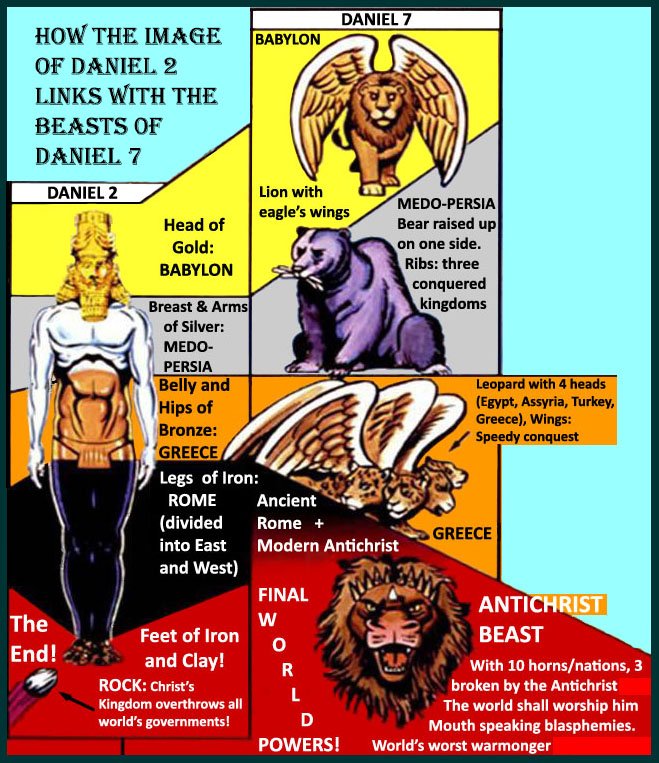
We begin now to see an obvious link to the “image” dream, seen by Daniel and Nebuchadnezzar some 50 years earlier. That “image” also represented four empires, the very same ones that are pictured here in this revelation.
Because that earlier dream was given to Nebuchadnezzar, not just to Daniel, the symbolism of the dream reflected how the king would have viewed himself and his empire – as “the head of gold”. In chapter 2 Christ was portrayed in symbolic terms as the Stone that shattered the “image”, which was symbolic of the empires of man.
But now Daniel has been “put out to pasture” and no longer had any direct connection with the king’s court. Without having to be concerned about the king’s view of the revelation, God didn’t have to pull His punches, so to speak, and could portray exactly how these warring empires appear in His eyes – as brute, predatory “beasts”. The “awful truth” about their ugly natures is expressed, yet with a certain amount of concealment. The symbolic portrayal avoids being too explicit as to their identities.
“Animals are not moral beings. Empires behave like amoral power blocs.” (Against the Flow by John Lennox, Pg. 228, first published 2015)
Nebuchadnezzar saw superficially the world-power as a splendid human figure, and the kingdom of God as a mere stone at the first. Daniel sees the world-kingdoms in their inner essence as of an animal nature lower than human, being estranged from God; (from Commentary, Critical and Explanatory on the Whole Bible by Jamieson, Faussett, Brown – 1871)
Although the world has become hostage to these seemingly uncontrollable forces – symbolized as “winds… stirring up the great sea” and “beasts” rising out of it – these fierce forces, as revealed later in the dream-vision, are not beyond God’s control.
In chapter 2 the “image” was made of non-living metals – a symbolism suitable for expressing the outward appearance of worldly empires. But the dream here in chapter 7 focuses on the true inner character of these same empires, and so they are portrayed in animated form and appear as “beasts”. (See Appendix 2 for more information.)
Like animals driven by instinct, empires (symbolized as “beasts”) also are driven by instincts: greed and glory, self-preservation, lust for power – anything but the desire to love God and fellow-man. Thankfully, as the dream-vision progresses, we learn that God’s plan is to overthrow the “beasts” and to establish His Kingdom in the Earth.
(At this point it should be noted that in these prophetic messages from the Books of Daniel and Revelation, the term “beast” could apply to almost any powerful empire ruling in the domain of human affairs. But for those mentioned in the Bible, the term “beast” refers to the empires who held control over the nation of Israel.)
Different from one another
These beasts were diverse one from another (v. 3), of different shapes, to denote the different genius and complexion of the nations in whose hands they were lodged. (from Matthew Henry’s Commentary on the Whole Bible, first published 1706)
*
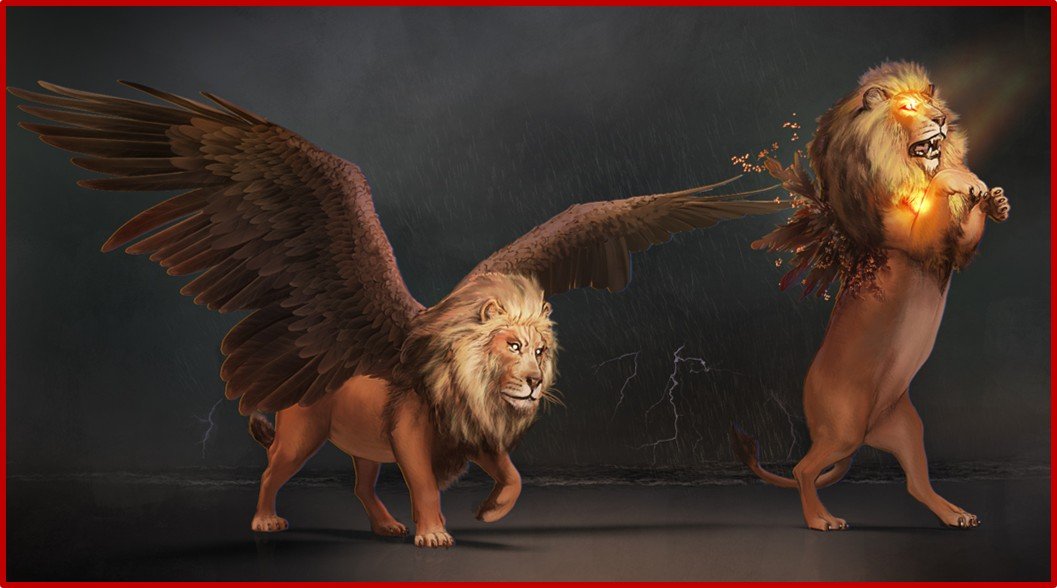
7:4 The first was like a lion and had eagles’ wings. Then as I looked its wings were plucked off, and it was lifted up from the ground and made to stand on two feet like a man, and the mind of a man was given to it.
The first was like a lion and had eagles’ wings
A question here might be, were the symbolisms of the winged lion (7:4), and the golden head (2:38), over-glorified representations for Babylon? Probably not. Babylon was a splendidly constructed city, whose hanging gardens were known as one of the seven wonders of the ancient world. And its king, Nebuchadnezzar, was about the only emperor in ancient times who truly worshiped the God of Israel (although it took some heavy-duty measures from the hand of God to bring him to that point.)
Here appears one peculiarity of the emblem – the union of things [lion with wings] which are not found joined together in nature… The proper notion, therefore, of this symbol, would be that of a dominion or conquest rapidly secured, as if a lion, the king of beasts, should move, not as he commonly does, with a spring or bound, confining himself to a certain space or range, but should move as the eagle does, with rapid and prolonged flight, extending his conquests afar. (Albert Barnes’ Notes on the Whole Bible, published in the 1800’s)
The wings of the eagle denote the rapidity with which the lion – Nebuchadnezzar, made his conquests; for in a few years, by his own arms, he brought his empire to such an extent, and raised it to such a degree of eminence, as was truly surprising. (Adam Clarke’s Commentary on the Bible, 1826)
Lions and eagles… are kings among beasts and birds… This emblem corresponds with the representation of the first kingdom with the golden head (ch. 2). What the gold is among metals and the head among the members of the body, that the lion is among beasts and the eagle among birds. (from Keil & Delitzsch Commentary on the Old Testament, 1864)
Its wings were plucked off, and it was lifted up from the ground and made to stand on two feet like a man, and the mind of a man was given to it.
Regarding this “lion” beast, there is the obvious identification of it with king Nebuchadnezzar. Nebuchadnezzar started off as a “beast” – living up to the picture given here of a fierce and ravening lion, a cold, calculating conqueror of the Mideast world.
God had tried to warn him in a dream, and Daniel also warned him to “break off your sins by practicing righteousness, and your iniquities by showing mercy to the oppressed.” (4:27) But inevitably, Nebuchadnezzar forgot Daniel’s and the dream’s warning, and in one of the most bizarre and unusual of historical episodes, became afflicted with some kind of insanity to think and act like a beast. After a few years, Nebuchadnezzar’s “reason returned to” him and he declared, “I, Nebuchadnezzar, praise and extoll and honor the King of heaven, all His works are right, and His ways are just; and those who walk in pride He is able to humble.” (4:36)
So in a very real way, “the mind of a man was given to” the “lion” beast. No longer ruled by the brute instincts of animal nature, the king “was lifted up from the ground and made to stand on two feet like a man.”
Nebuchadnezzar’s transformation from a beast crawling around in the fields to a sane and humble human being mirrored his transformation from cold, heartless ruler to one who feared God and had finally learned to rule with compassion and justice – as illustrated so well in Daniel’s dream-vision.
(Further commentary on this passage may be found in Appendix 3.)
With all Babylon’s brute strength, and lion-like animal courage, and eagle-like rapidity of conquest, it nevertheless passed away: an emblem of the transitoriness of all power that rests on mere force, and not on a spiritual basis. The only fact thought noteworthy here by the Spirit of God in its history is, the remarkable visitation whereby Nebuchadnezzar was taught that pride and independency of man in relation to God only degrades him to be the fitting associate of the brutes; whereas humility toward God and conscious dependence on God, raise him to the true dignity of man, so that he “is made stand upon his feet as a man,” with head and eyes no longer downward, but lifted upward, and a man’s heart is given to him. Let us learn hence that, if we would be exalted, we must abase ourselves, and be clothed with humility. (from Commentary, Critical and Explanatory on the Whole Bible by Jamieson, Faussett, Brown – 1871)
*
7:5 And behold, another beast, a second one, like a bear. It was raised up on one side. It had three ribs in its mouth between its teeth; and it was told, “Arise, devour much flesh.”
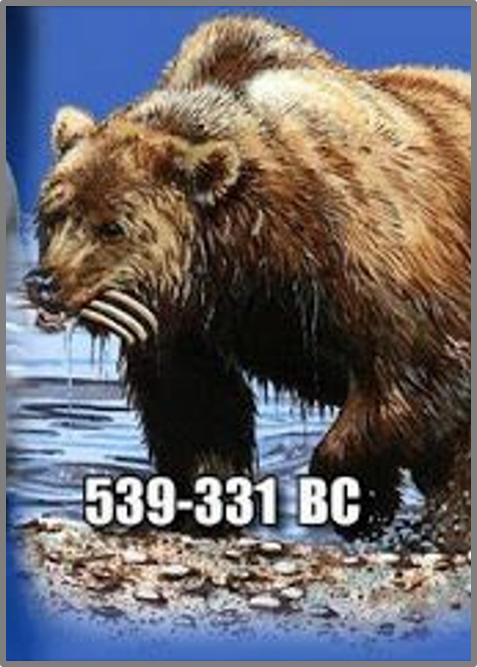
Following the Babylonian empire came the Medo-Persian empire. Here again, the symbolic portrayal is strikingly accurate. In the image-dream of 50 years earlier, the arms on each side of the breast signified that the second empire would consist of two parts (Media and Persia). And the same is indicated, even more clearly in chapter 8 in a vision of “a ram which had two horns… but one was higher than the other, and the higher one came up last,” and in the angel Gabriel’s disclosure that the “ram which you saw… are the kings of Media and Persia” (8:3,20 – NKJV)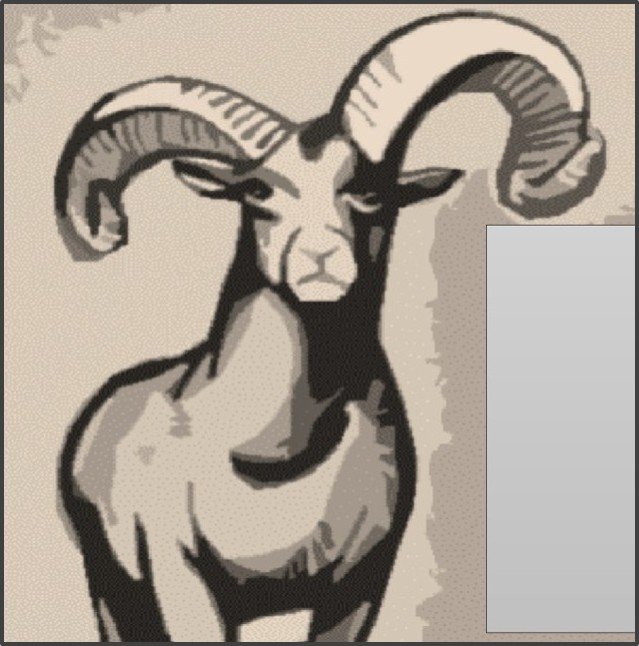
And here, two years earlier in chapter 7, the dual nature of this empire is represented by the beast “raised up on one side” – meaning that the Medo-Persian bear has two sides: the one, the Median side, is at rest after greatly contributing to the rise of the new empire; and then the other, the Persian side, raises itself up, and ends up higher and the dominant force in the empire.
For more information on the “bear” symbolism, see Appendix 4.
Three ribs in its mouth between its teeth; and it was told, ‘Arise, devour much flesh’
“Three ribs” could symbolize the three previous empires that once had controlled Israel: Egypt, Assyria, Babylon. Or, if one considers Assyria and Babylon as one kingdom, then the three ribs could represent the three main territorial conquests of the Medo-Persian empire: Egypt, Babylon, and Lydia (modern Turkey). Whatever the case, after so much conquest, the Medo-Persian empire extended over a much wider territory than the previous Babylonian empire – which would explain why the bear “was told, ‘Arise, devour much flesh.’”
*
7:6 After this I looked, and behold, another, like a leopard, with four wings of a bird on its back. And the beast had four heads, and dominion was given to it.
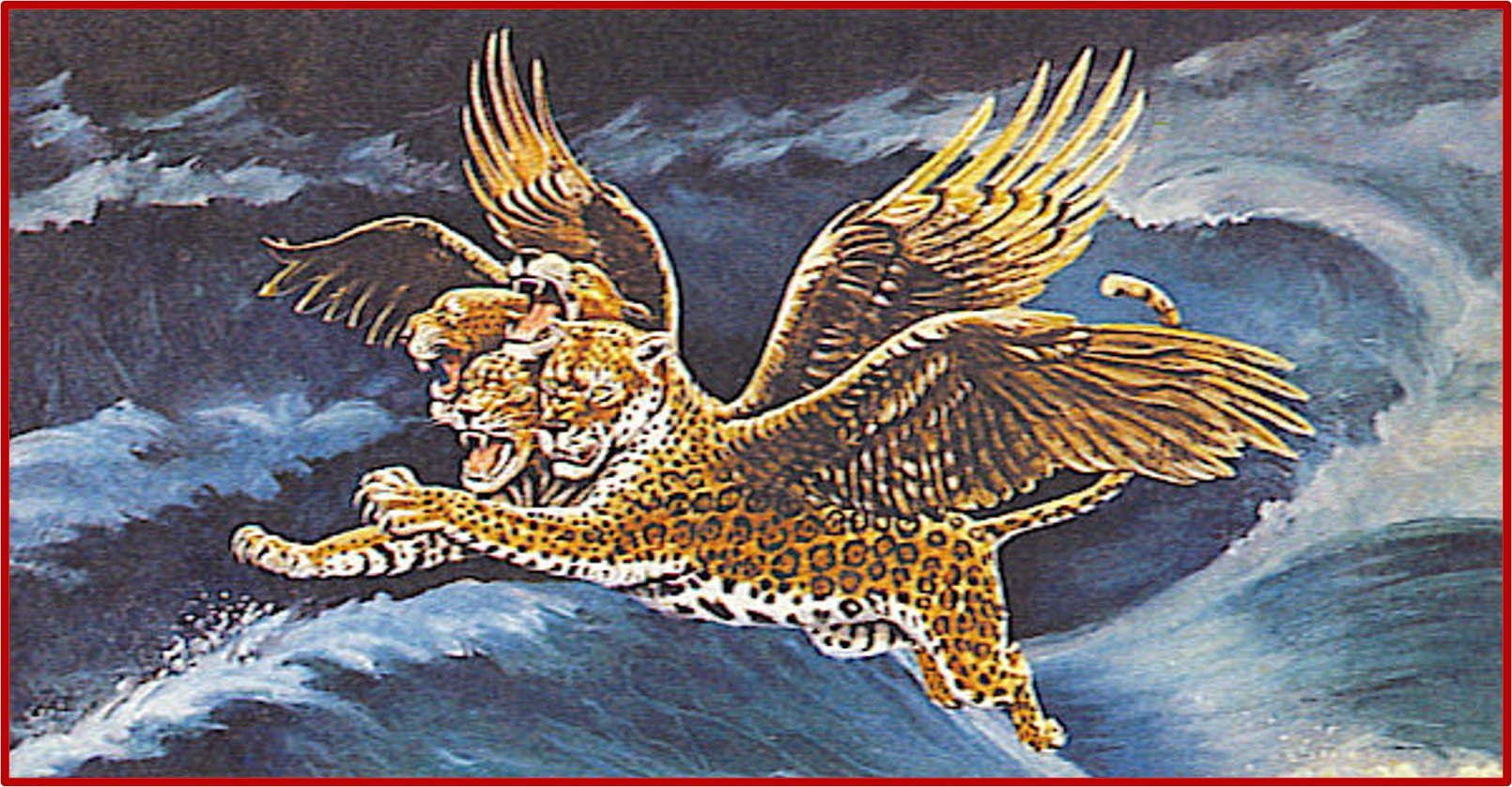
From the words, “after this I looked”, Daniel’s attention is directed towards this particular Leopard-Beast. The reason for this may be that in upcoming revelations (in chapters 8 and 11), the Greek empire serves as a sort of springboard to catapult those upcoming revelations into the End of the Age. So it was a bit of preparation perhaps, underlining the significance of the Greek empire in those future revelations.
In contrast to the ponderous, lumbering “bear”, came this next Beast, “like a leopard”. The Greek empire under Alexander the Great was agile and in one battle after another in quick succession, defeated the Medo-Persian empire in a short space of less than 10 years. The leopard is neither so kingly as the lion with its “eagles’ wings”, nor so strong as the bear, but resembles both in its beast-like rapaciousness, and is superior to them in the speed with which it catches its prey. The leopard’s “four wings of a bird” express the agility of its movements akin to the speed of a bird and express the fact that this beast would extend itself in flight to all regions of the earth. The “lion” beast of Babylon, with only two wings, made a speedy conquest but did not spread out nearly to the same extent as the Greek or Medo-Persian empires. (See maps.)
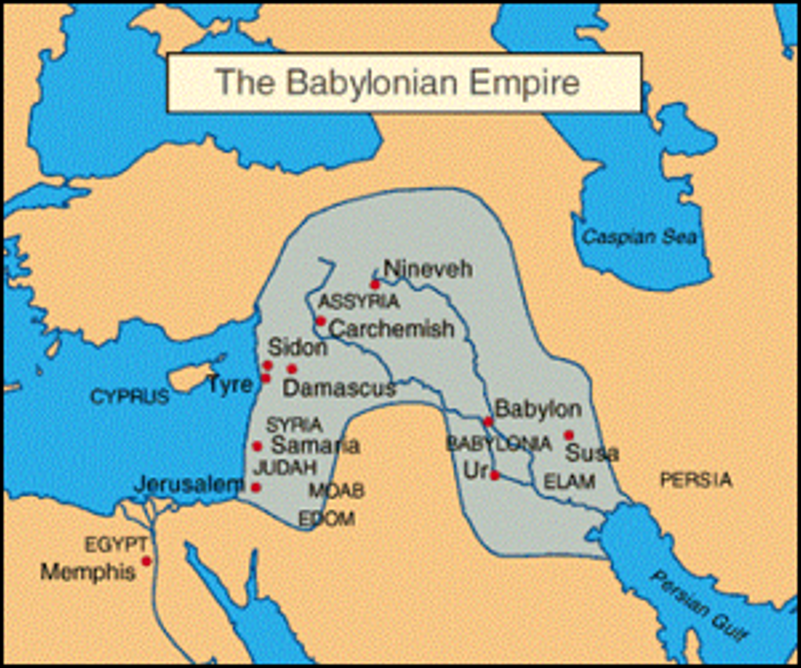
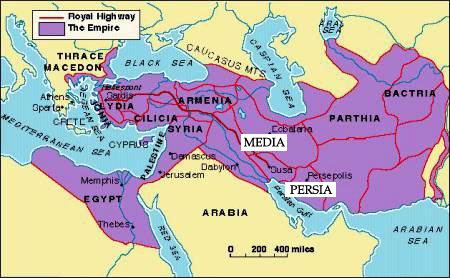
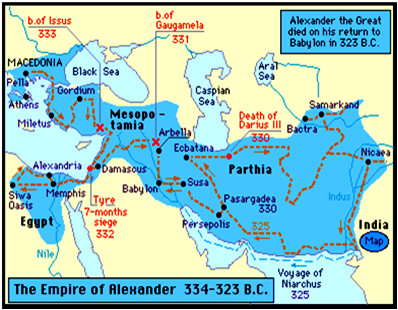
One final point: The four wings are mentioned before the four heads, signifying that the kingdom spreads itself over the earth and then divides itself into four kingdoms. And although separate empires, yet they were all part of the same leopard “beast”, meaning that they all remained as Greek-ruled kingdoms. This fourfold division of the Greek empire is mentioned also in the next revelation: “a male goat came from the west… without touching the ground [speedily]. And the goat had a conspicuous horn [Alexander the Great]… the great horn was broken, and instead of it there came up four conspicuous horns toward the four winds of heaven.” (8:5,8) 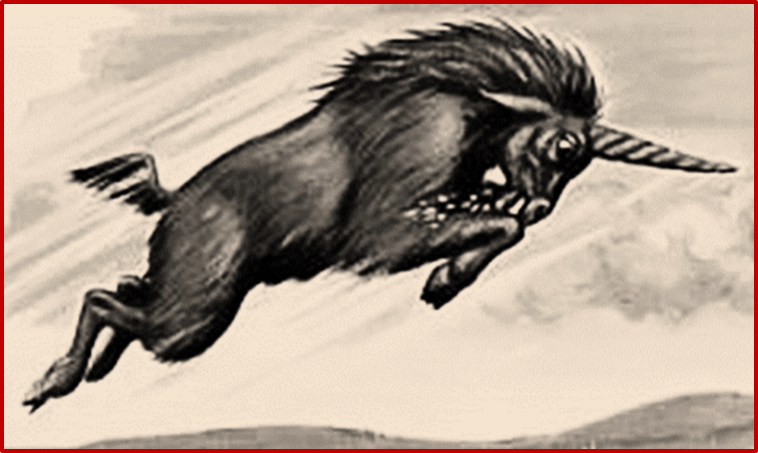 The same is mentioned again in a revelation that came near the end of Daniel’s life about 16 years later. (11:2-4)
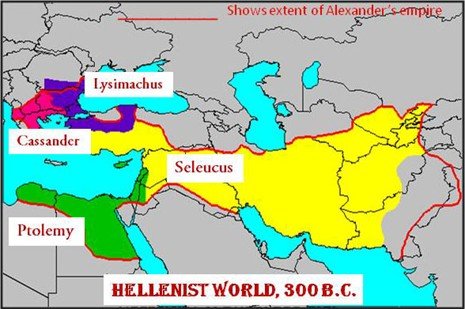
Historically, after Alexander’s death, the Greek empire ended up being divided amongst four of his generals, as pictured in the map below:
Dominion was given to it
And dominion was given to it – by God; not by Alexander’s own might. For how unlikely it was that 30,000 men should overthrow several hundreds of thousands. Josephus (`Antiquities,’ xi. 6) says that Alexander adored the high priest of Jerusalem, saying that he, at Dium in Macedonia, had seen a vision of God so habited, inviting him to go to Asia, and promising him success. (from Commentary, Critical and Explanatory, on the Whole Bible by Jamieson, Faussett, Brown – 1871)
For some further commentary about the Leopard-Beast, see Appendix 5.
*
God foreorders, and therefore must foresee the end from the beginning. The cruelty and rapacity of earthly conquerors are kept within appointed limits by Him, as wild beasts restrained within an enclosure which they cannot pass. He constrains the wrath of man to praise Him. (from Commentary, Critical and Explanatory, on the Whole Bible by Jamieson, Faussett, Brown – 1871)
So far, there is an important observation we can make about the symbolic pictures of the Beasts. That has to do with the peculiar details used to describe them: the lion being given a man’s heart, the bear raised up on one side, the leopard with four wings and four heads. All those seemingly minor details serve the purpose of making it easy to identify the Beasts and know which nation or empire each one is supposed to represent. Keeping this in mind about the special significance of peculiar details will help a great deal as we move into the description of the “fourth beast” and attempt to discern which empire it represents.
*
Continue to Daniel 7:7-12, Fourth Beast and Its Overthrow
APPENDIX 1: The number 4 in ancient numerology
“Four is the worldly number… the world resolves itself into four elements: fire, air, earth, and water. The points of the compass are four: north, east, south, west. There are four seasons, four winds, four grand divisions of the earth. The great world-powers of history and prophecy are four…” (from The Apocalypse, Lectures on the Revelation of Jesus Christ by Joseph Seiss, 1913)
And we could also include the four Horses of Revelation 6, symbolic of the four powers that influence rulers and events on Earth.
[RETURN]
*
APPENDIX 2
The fourth world-kingdom, in its development and relation to the people of God, is much more clearly exhibited than in ch. 2. These differences have their principal reason in the difference of the recipients of the divine revelation: Nebuchadnezzar, the founder of the world-power, saw this power in its imposing greatness and glory; while Daniel, the prophet of God, saw it in its opposition to God in the form of ravenous beasts of prey. Nebuchadnezzar had his dream in the second year of his reign, when he had just founded his world-monarchy; while Daniel had his vision of the world-kingdoms and of the judgment against them in the first year of Belshazzar, i.e., Evilmerodach, the son and successor of Nebuchadnezzar, when with the death of the golden head of the world-monarchy its glory began to fade, and the spirit of its opposition to God became more manifest. (from Commentary, Critical and Explanatory, on the Whole Bible by Jamieson, Faussett, Brown – 1871)
[RETURN]
*
APPENDIX 3:
After a time Daniel sees a change take place with this beast. The wings… are plucked off: it is deprived of its power of flight, so that it can no more fly conquering over the earth, or hover as a ruler over it… for it will be lifted up from the earth… and be placed on its feet as a man… to the right attitude of a human being. This change is further described by the words, “a man’s heart was given to it,” denoting that the beast-nature was transformed to that of a man. The three expressions [lifted up, standing up, mind of a man] thus convey the idea, that the lion, after it was deprived of its power of flight, was not only in external appearance raised from the form of a beast to that of a man, but also that inwardly the nature of the beast was ennobled into that of a man.
…there lies herein not only the idea of the superiority of the first world-kingdom over the others, as is represented in ch. 2 by the golden head of the metallic image, but also manifestly the typical thought that the world-kingdom will first be raised to the dignity of manhood when its beast-like nature is taken away…
(from Keil & Delitzsch Commentary on the Old Testament, 1864)
Humanity is impossible without divinity: it sinks to beastiality (Ps 32:9; 49:20; 73:22)…The lower animal, with all its sagacity, looks always to the ground, without consciousness of relation to God. What elevates man is communion with God, in willing subjection to Him. His erect posture, with head uplifted toward heaven, is indicative of his high destiny. The moment he tries to exalt himself to independence of God, like Nebuchadnezzar (Dan 4:30), he sinks to the beast’s level, to which accordingly that monarch was literally reduced for a time.
So long as Nebuchadnezzar, in haughty pride, relied on his own strength, he forfeited the true dignity of man, and was therefore degraded to be with the beasts. Dan 4:16, “Let his heart be changed from man’s, and let a beast’s heart be given unto him.” But after that he learned by this sore discipline that “the Most High ruleth in the kingdom of men” (Dan 4:35-36), the reverse change took place in him – `a man’s heart is given to him, instead of his former beast’s heart; he attains man’s true position – namely, to be consciously dependent on God’ (cf. Ps 9:20).
(from Commentary, Critical and Explanatory, on the Whole Bible by Jamieson, Faussett, Brown – 1871)
[RETURN]
*
APPENDIX 4:
Behold another beast, a second, like to a bear-symbolizing the austere life of the Medes and Persians in their mountains, also their cruelty … The Medes, an ancient people [from Madai, son of Japheth], and the Persians [distant descendant of Shem], a modern tribe, formed one united sovereignty, in contrast to the third [Greece] and fourth [Rome] kingdoms, each of which was originally one, but was afterward divided.
(from Commentary, Critical and Explanatory, on the Whole Bible by Jamieson, Faussett, Brown – 1871)
[Another beast, a second, like to a bear] This was the Medo-Persian empire, represented here under the symbol of the bear, since the largest species of these animals was found in Media, a mountainous, cold, and rough country, covered with woods. (Adam Clarke’s Commentary on the Bible, 1826)
The characteristics of the kingdom, therefore, that would be denoted by the bear would be ferocity, roughness, fierceness in war, especially when provoked; a spirit less manly and noble than that denoted by the lion; severe in its treatment of enemies, with a mixture of fierce and savage cunning….
In the image seen in Dan. ii., this kingdom, denoted by the breast and arms of silver (Dan. 2:32), is described in the explanation (Dan. 2:39) as “inferior to thee;” that is, to Nebuchadnezzar… [Consider] the mad projects of Cambyses, and his savage rage against the Ethiopians – well represented by the ferocity of the bear; of the ill-starred expedition to Greece under Xerxes – an expedition in its fierceness and folly well represented by the bear, and of the degeneracy of the national character after Xerxes – well represented by the bear as compared with the lion… No one acquainted with the history of that nation can doubt the propriety and applicability of the emblem.
(Albert Barnes’ Notes on the Whole Bible, published in the 1800’s)
[RETURN]
*
APPENDIX 5:
A nation or kingdom [Greece] that would have more nobleness than the one represented by the bear, but a less decisive headship over others than that represented by the lion; a nation that was addicted to conquest, or that preyed upon others; a nation rapid in its movements, and springing upon others unawares,
All the characteristics of the animal that have been noticed —
(1) as next in dignity to the lion:
(2) as distinguished for a fierce nature;
(3) as characterized by fleetness;
(4) as known for lying in wait, and springing suddenly upon its prey…
…The four heads united to one body. It is well known that when Alexander died, his empire was left to four of his generals, and that they came to be at the head of as many distinct dominions, yet all springing from the same source, and all, in fact, out of the Macedonian empire. This fact would not be so well represented by four distinct and separate animals, as by one animal with four heads; that is, as the head represents authority or dominion, one empire, in fact, now ruling by four distinct authorities. The one empire, considered as Macedonian, continued its sway until it was swallowed up by the Romans… After the battle of Ipsus, 301 B.C., in which Antigonus was defeated, the empire was divided into four kingdoms – Thrace and Bithynia under Lysimachus; Syria and the East under Seleucus; Egypt, under Ptolemy Soter; and Macedonia under Cassander.”
(Albert Barnes’ Notes on the Whole Bible, published in the 1800’s)
The third beast, which Daniel saw after the second, was like a panther (leopard), which is neither so kingly as the lion nor so strong as the bear, but is like to both in rapacity, and superior to them in the springing agility with which it catches its prey; so that one may say, with Kliefoth, that in the subordination of the panther to the lion and the bear, the same gradation is repeated as that this is found (of the third kingdom) in ch. 2 of the copper (brass). Of the panther it is said, that it had four wings of a fowl and four heads. The representation of the beast with four wings increases the agility of its movements to the speed of the flight of a bird, and expresses the thought that the kingdom represented by that beast would extend itself in flight over the earth; not so royally as Nebuchadnezzar-for the panther has not eagle’s wings, but only the wings of a fowl – but extending to all the regions of the earth, for it has four wings.
…that the four heads do not rise up one after another, but that they all exist contemporaneously on the body of the beast, and therefore can only represent four contemporary kings, or signify that this kingdom is divided into four kingdoms. That the four wings are mentioned before the four heads, signifies that the kingdom spreads itself over the earth with the speed of a bird’s flight, and then becomes a fourfold-kingdom, or divides itself into four kingdoms, as is distinctly shown in Dan 8:5 ff. – The last statement, and dominion was given to it, corresponds with that in Dan 2:39, it shall bear rule over all the earth, i.e., shall found an actual and strong world-empire.
(from Keil & Delitzsch Commentary on the Old Testament, 1864)
[RETURN]
*
