

1 – Introduction
2 – Mystery of Spiritual Energy
3 – Authority and Dominion of Christ
4 – Problems in Christianity
5 – Origin of the Western Version of Eastern Mysticism
6 – Theosophy’s Early Days
7 – The Name of Christ, or What’s in a Name?
8 – Dark Undercurrents
9 – Return of the Christ
10 – Conclusion
Appendix – What Theosophy Hopes You Won’t Notice
6 – THEOSOPHY’S EARLY DAYS
Judging by the writings of Blavatsky – a portion of which appeared in the previous post – the movement that she launched, Theosophy, got off to a bad start. That doesn’t mean the movement was not popular; many influential and successful people endorsed the teachings of Theosophy.
Why is that, we may wonder? As mentioned above, enterprising individuals who were seeking to explore new ideas, causes, and ways of doing things, felt confined and stifled by the version of Christianity that existed in those days. They longed for a cultural atmosphere that would allow freedom of expression. Since they could not find that tolerant atmosphere in the traditional Christianity of the day, many of these individuals turned to Theosophy.
Take, for example, Mahatma Gandhi (1869-1948), who wanted to bring a peaceful transfer of power in India, while at the same time bringing together the different warring, religious factions in the nation. To its credit, Theosophy goes to great lengths to see the good and truth in all the religions. And this universal approach resonated with him. No surprise then that Annie Besant, who, besides being director of the Theosophist movement, was also an activist in the Indian independence movement and worked for some time with Gandhi.
So how should we assess the influence of Mahatma Gandhi? First of all, it helps to understand that Gandhi had become disillusioned with Christianity. He remarked once, “I like your Christ. I do not like your Christians. Your Christians are so unlike your Christ.” He perceived a big difference between the representatives of Christianity and Christ Himself. Nevertheless, Gandhi’s sayings about Christ and how His example influenced him shows that he had a great respect, not for Christian religion, but for Christ Himself.
“A man who was completely innocent, offered himself as a sacrifice for the good of others, including his enemies, and became the ransom of the world. It was a perfect act.”
“Though I cannot claim to be a Christian in the sectarian sense, the example of Jesus suffering is a factor in the composition of my undying faith in non-violence which rules all my actions, worldly and temporal.”
There is a Scripture about those who are the true followers of Christ – “who keep the commandments of God and have the testimony of Jesus Christ.” (Revelation 12:17) Did Gandhi “keep the commandments of God”? Certainly, he obeyed God’s commandment to love. (Matthew 22:37-39) In the Parable of the Final Judgment, it was those who ministered to the poor and struggling underdogs who were accepted at the Final Judgment. (Matthew 25:31-46) This Gandhi did for the lower castes of Indian society. Did he “have the testimony of Jesus Christ”? Well, Gandhi may not have been an outspoken believer, but his whole life was a testimony of a true peace-maker, of how Christ, if He were there, would have carried out the same mission of non-violent struggle for freedom in India.
With his very public profile in the culture in which he lived, it was important to be an example (rather than a sermon) of how Christ would have lived. And this is really what Gandhi did. His life and non-violent approach showed that He believed and lived the teachings of Christ. “He that practices righteousness is born of God.” (1John 2:29) So, although Gandhi “cannot claim to be a Christian in the sectarian sense” as he put it – by which he meant that he wasn’t baptized or a member of a Christian group – nevertheless, it’s a safe bet that he now has an honored place in the Halls of Heaven.
Although Theosophy had a large following among the intelligentsia, most of those intelligentsia came from the West. In India, however, a good many of her thinkers and wise men were not much impressed. For example, Swami Vivekananda was a leading light influential in the culture of India who had his share of misgivings about Theosophy. So also did Sri Aurobindo. (See Appendix about their evaluations of Theosophy.)
Another of India’s sages, Rabindranath Tagore (1861-1941), was, like Gandhi, involved in the movement of Theosophy. And as it was for Gandhi, so for Tagore. His involvement with Theosophy did not prevent him from maintaining great respect for Jesus Christ. It is easy to see that certain of Tagore’s literary works (such as the lengthy poem The Child), were influenced by the life and work of Christ.
After Blavatsky, Annie Besant became the next director of the Theosophy movement in 1891. Her thoughts about Christ mirrored pretty much those of Blavatsky:
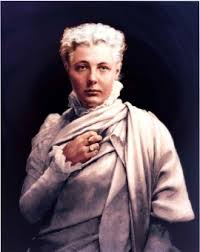
“Before about A.D. 180 there is no trace of FOUR gospels among the Christians.” (from “Christianity” by Annie Besant, 1876)
“Against the teachings of eternal torture, of the vicarious atonement, of the infallibility of the Bible, I leveled all the strength of my brain and tongue, and I exposed the history of the Christian Church with unsparing hand, its persecutions, its religious wars, its cruelties, its oppressions. (An Autobiography, Chapter VII, by Annie Besant, 1908).”
“Don’t throw the baby out with the bathwater” is the saying that could be attached to these angry words. There is dirty “bathwater” in the religion of Christianity, to be sure. This has resulted, not from Christ’s teaching or example, but from those who left the teachings of Christ. And this is something that Jesus predicted would happen, as noted already in the section “Problems in Christianity”.
By the way, Besant’s assessment of Christianity is not as dreadful as she portrays it. The world has benefited enormously through the centuries from the work of those who stayed true to the teachings of Christ: in science, education, music, hospital care, orphanages, disaster relief, human rights, the anti-slavery movement, pension and welfare programs, and the list could go on.
For more insight into how Christianity has benefited human society, here again is the link to Jesus: Person of Interest podcast by J. Warner Wallace; and another helpful article, “The Maligning of Early Christianity” by Pascal-Emmanuel Gobry.
De-bunking Christianity has become all too common in recent times. And not without reason. As noted in Post 3, the Lord Himself spoke about this already in the Book of Revelation – regarding the chastisement that will be dished out to the wayward modern society of the Great Harlot. There are some problems with Christianity, true enough, but we should not allow the modern information highway, with its sometimes exaggerated cultural prejudices, sidetrack us from having faith in Christ Himself.
And just because there is some dirty “bathwater”, that doesn’t justify throwing out the “baby” – that great event of Christ’s First Coming, when God entered our world in the person of His Son. This was the pivotal event of human history. Christ’s whole life – His birth, teachings, miracles, death and Resurrection – resulted in the rescue of the human race from itself and marked the beginning of God’s Kingdom on Earth.
But of course, the forces of spiritual Darkness don’t want the world to come to that realization.
Evidently, the founders of Theosophy could not, for it required too much humbling. And to excuse themselves, they had to rise up in opposition. To attack the religion of Christianity (with constructive criticism) is fair game. But the real Christ is not the one who is misrepresented in much of Christianity today.
And as the example of these two ladies (Blavatsky and Besant) shows, critics can go to an extreme. And when they attack the Person of Christ Himself, then it’s a good indicator that the criticism has gone too far.
Critics do this when they undermine faith, especially when they cast doubt on the validity of the historical records God has left – the Gospels which give clear and authentic detailing of the First Coming of the Christ. The miracles He did, His wise teachings, His death and Resurrection were witnessed and set down in writing by the first disciples.
How often has it happened with some individuals who start off as loyal followers in a movement or organization? Then something happens to sour their loyalty, and in time they end up becoming the most violently opposed and worst betrayers and traitors. Judas Iscariot, a close disciple of Christ, an “insider”, was the strategic weak link that Christ’s enemies used to bring about the Crucifixion.
Both these ladies, Blavatsky and Besant, came from Christian backgrounds. Granted, what they saw of Christianity was probably not very good. But the same was true of Mahatma Gandhi. Yet he maintained a deep respect, even love, for Christ. Had Blavatsky and Besant been more sincere and genuinely searching for truth, seeking humbly for answers, the Holy Spirit would have directed them to find the love of God and guided them back into the arms of Christ.
Instead, they chose another path, one that didn’t require humble submission. They preferred to reject Christ in order to avoid coming under the searchlight of Him from whom nothing is hid. And to them it meant attacking, sometimes vehemently, the faith they had once embraced.
But the question that needs to be asked, how did these founders of Theosophy express, in more subtle ways, their opposition and betrayal of whatever faith in Christ they might have had in their earlier years? The answer appears to lie in their giving voice to subtle insinuations, undercurrents of thought, innocent and harmless on the surface, but like a sugar-coated poisonous pill, ideas that undermine faith in Christ.
As a result, modern New Age thought has inherited, undwittingly perhaps, a distant attitude towards Christ. And this can only be a hindrance to real spiritual growth. Our task then is to discern where Theosophist ideas have entwined themselves into the legitimate and beneficial disciplines of Eastern Mysticism. And root them out. For, as the saying goes, a gardener cannot only love flowers; he must also hate weeds.
Now, although Annie Besant was a critic of Christianity, and sadly of Christ also, she deserves credit for her dedication to fighting injustice. She did “hunger and thirst after righteousness”, as stated in the fourth Beatitude. (Matthew 5:6) But as mentioned, she did “throw the baby out with the bathwater” and was unable to retrieve the faith that, apparently, she once had in her youthful years.
But it was a different story for the next leading light of Theosophy, Alice Bailey. In her own words,
Many years of work as an evangelist and as a teacher in the field of Christian principles, and a difficult cycle in which I faced the problem of my own relation to Christ and to Christianity, have brought me to two definitely clear and clean-cut recognitions: first, a recognition of the reality of the Individuality of Christ and of His Mission; and secondly, a recognition that the development of the Christ Consciousness and the Christ Nature in individual man, and in the race as a whole, carries with it the solution of our world problem. Most heartily do I endorse the words of Arthur Weigall when he says:
“Yet the Jesus of History as distinct from the Jesus of Theology, remains `the way, the truth, and the life’; and I am convinced that concentration upon the historic figure of our Lord and upon His teaching can alone inspire in this Twentieth Century that fervent adherence and service which in former ages could be obtained from the average layman by the expounding of theological dogmas, the threat of hell, and the performance of elaborate rites and ceremonies.” (The Paganism in Our Christianity, by Arthur Weigall, pg. 16.1)
(“Forward” From Bethlehem to Calvary. 1937)

From this quote we may safely conclude that Alice Bailey held onto her faith in Christ and returned to Him and His teachings, which in those days (and now too) had been corrupted with the “bathwater” of dogma, threats of hell, and ritualism (as the above quote puts it). She wanted to encourage a spiritual consciousness of Christ in the inner being (as opposed to outward religious show). And this, she felt, would be the best way to prepare for, even bring about, the Second Coming of Christ.
The above passage From Bethlehem to Calvary acknowledges Theosophists’ criticisms of traditional Christianity but does not “throw the baby out with the bathwater”. It recognizes the fact that the world’s greatest need is what she calls “Christ-consciousness”. And so, Alice Bailey set out on a quest to clear away the rubble of misguided church practices and teaching and thereby uncover the essence of what it means to be a true follower of Christ.
So in spite of her earlier misgivings about how faith in Christ was being practiced, Bailey continued to accept Christ as the only solution to the creation of a better world. It was simple recognition of the fact that unless the heart of man is changed by the love of God, no “ism” is going to succeed in bringing about a lasting utopia. Only the love and power of Christ can bring about God’s Kingdom of Heaven on Earth.
Perhaps because of her affirmation of Christ as the true “Light of the world”, Alice Bailey and her husband ended up getting expelled from the Theosophical movement. (John 1:4,9; 8:12; 9:5) Perhaps also, she had misgivings about certain aspects of Theosophical doctrine and practice. (For more information on this “dark” side of Theosophy, see the Appendix Post: What Theosophy Hopes You Won’t Notice.)
Although much of what Alice Bailey wrote before her return to faith in Christ was misguided, her book From Bethlehem to Calvary sets the record straight. A few years later her “Great Invocation” prayer was written and ended up becoming a mainstay of New Age and Eastern Mysticism devotions. The final version of this prayer, published in 1945 shortly before her death, contains the words, “May Christ return to Earth”.
Continue to: 7 – The Name of Christ, or What’s in a Name?
APPENDIX: Thoughts from Swami Vivekananda and Sri Aurobindo about Theosophy
Swami Vivekananda (1863-1902) left a big impression at the Chicago World’s Parliament of Religions in 1893. It was a surprisingly positive and helpful addition to the proceedings of that great event. The Swami, even though he was thoroughly knowledgeable in the ways of Eastern Mysticism, liked to carry with him a copy of Thomas a Kempis’s book The Imitation of Christ. In preparation for the journey to Chicago, Vivekananda had a run-in with the Theosophist lodge in Madras:
The attitude of the Theosophists towards the Swamy [Vivekananda] from the beginning was aught but desirable. When the Swamy first came to Madras four years ago, he called upon Col. Olcott with a view to procure a letter of introduction to his friends in America. In the course of the conversation the Col. asked him if he would join his Society and the Swamy had to bear the brunt of the Col.’s anger when, for reasons of his own, he felt constrained to decline the offer. Nor satisfied with this, the Col. wrote very disparagingly of the Swamy in consequence whereof the members of the American and European Theosophical Societies were forbidden to attend the Swamy’s lecture on pain of dismissal. ‘The Devil is going to die’, he wrote, ‘and our cause is safe.’ Is this the treatment which the Hindus would expect to be meted out to their representative at the Parliament of Religions, at the hands of the Theosophists, the loudest braggers in the world of ‘Toleration’, and ‘Universal Brotherhood’?
[from “Counterpoint: Swamy Vivekananda and theosophists (A Reply)” The Hindu – March 2, 1897 (Updated – November 17, 2021) by T.S. Seshaiyar and B.A. Tattamangalam
Perhaps this experience is what led Vivekananda to remark,
“The Hindus have enough of religious teaching and teachers amidst themselves even in this Kali Yuga, and they do not stand in need of dead ghosts of Russians and Americans.” (Found among Swami Vivekananda’s papers By VivekaVani – August 11, 2011.)
Sri Aurobindo (1872-1950) was educated in England, where his experiences with Christianity were not so positive apparently. After getting jailed for his activities in the Indian nationalist movement, Aurobindo turned his attention to spiritual reformation. He wrote extensively and founded the Aurobindo Ashram in 1926, which is till flourishing today.
The phenomenon of the Theosophical Society is a warning to us of a pressing urgency. It will never do to allow the science of Indian knowledge to be represented to the West through this strange & distorting medium. [from “Essays Divine and Human: The Psychology of Yoga” in Complete Works of Sri Aurobindo, Vol. 12 , circa 1911]
It [Theosophy] degenerated into the extravagances of the Gnostics & Rosicrucians and the charlatanism of magic and sorcery… into the shrouded secrecy of the Esoteric society… They have fallen into the snare of Gnostic jargon and Rosicrucian mummery and have been busy with a nebulous chase after Mahatmas, White Lodges and Lords of the Flame. [from “Essays Divine and Human: Science & Religion in Theosophy” in Complete Works of Sri Aurobindo, Vol. 12, 1910-1913]
